

"I fear the Greeks, even when they bear gifts."
— Virgil, Aeneid
A radically modernized revision of a timeless tale — ideologically twisted and transformed — lurks inside Christopher Nolan’s The Odyssey. It rushes out and assaults those who expected a faithful adaptation of a story that survived 2,700 years, mercilessly cutting down anyone who cherishes Homer’s epic poem. As exhilarating as it is, you’re left feeling that you’ve just witnessed an audacious act of artistic plunder.
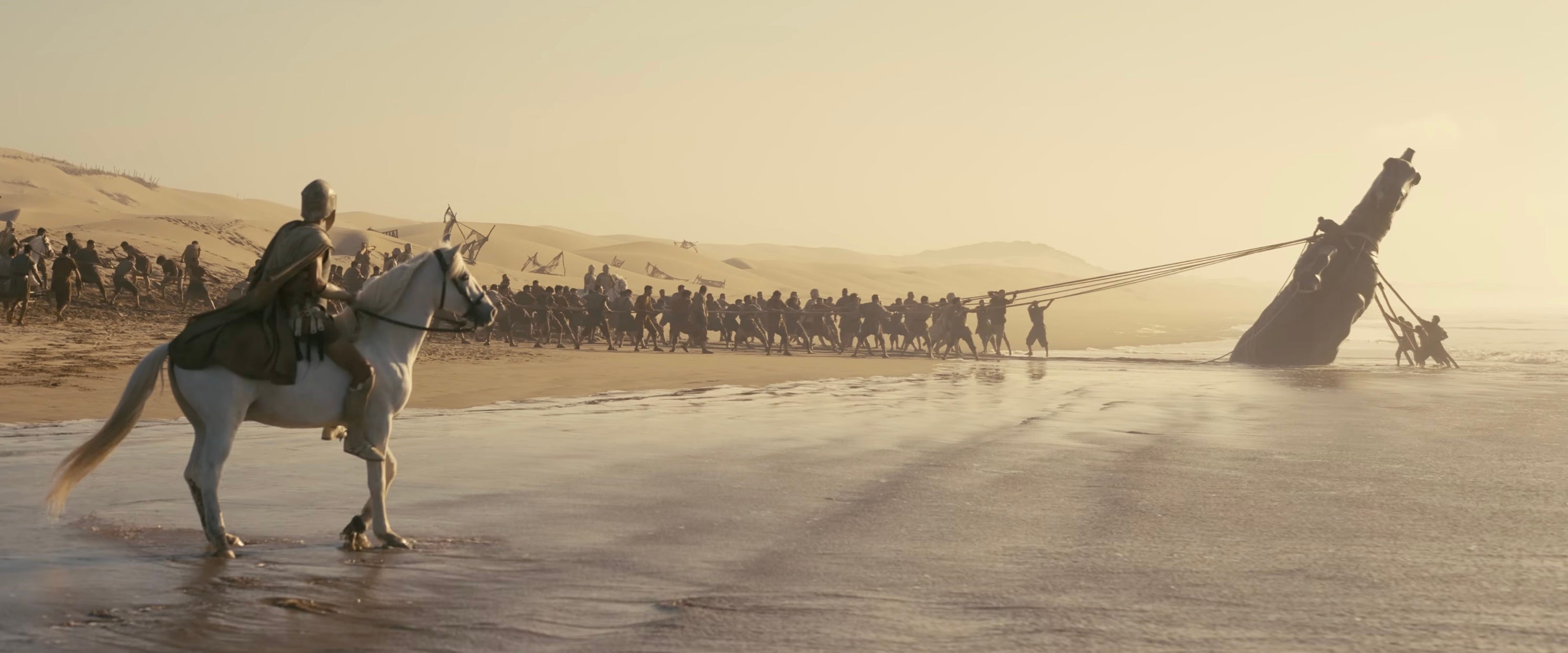
Like the Trojans, those who walked out of the cinema with slumped shoulders and bemused expressions perhaps shouldn’t have been so surprised. In hindsight, the film’s marketing was filled with ominous portents, and its culturally ahistorical casting clearly foreshadowed the vision we were met with. As for myth and magic — the stuff that colors the original poem with ineffaceable wonder and creativity — Nolan showed his hand when he openly discussed the need to crack the “approach to mythological elements in a sort of real-world way.”1
Those who thought Nolan’s The Odyssey would be authentically grounded in the Late Bronze Age of Homer’s poem were fools.
Still, Nolan earned the benefit of the doubt even amid all these ill winds and storm clouds. After all, this is a filmmaker known for his tactile realism and habit of recruiting experts to ground even his most fantastical films in the “real-world way” of the worlds they depict. Most famously, he worked with theoretical physicist Kip Thorne to keep the science in Interstellar (2014) and speculative mechanics in Tenet (2020) believable, historian Joshua Levine to accurately reconstruct the evacuation in Dunkirk (2017), and physicist David Saltzberg to keep the nuclear science exact in Oppenheimer (2023).
That he chose not to consult a classicist, Homer scholar, Ancient Greek historian, or Bronze Age archaeologist for The Odyssey is perhaps the clearest sign that Nolan was not very interested in a faithful adaptation or recreation of 12th-century BC Greece. In fact, an expert has publicly flayed the film. Emily Wilson, whose translation has become the defining contemporary English version of The Odyssey — and one Nolan himself referenced — wrote a brutally honest review2 that reads like a 4,000-word Mortal Kombat fatality. It’s worth quoting the full paragraph that lit the internet on fire:
Nolan’s Odyssey lacks many of the elements that make the poem great. It has nothing convincing to say about time, memory, history, war, or about the relationship between one warrior’s glorious return and the lives of his family, adversaries, comrades, friends and neighbors. It lacks psychological, emotional, political and ethical depth. Its narrative structure is gimmicky. The writing is abysmal. None of the characters has convincing motivation for their actions or words. There are no sex scenes, and all the food looks horrible.
All of this points to The Odyssey being Nolan’s most controversial film to date — one that launched a thousand questions. But more on those later.
Plot in a Nutshell
It’s been 20 years since the infamous Trojan War, and all its survivors have returned home. All but one. Odysseus (Matt Damon) remains stuck on an island with the goddess Calypso (Charlize Theron), while his son Telemachus (Tom Holland) and wife Penelope (Anne Hathaway) are back home in Ithaca, trying to stave off a swarm of suitors who lust for power and Penelope. As Odysseus’ memory comes back to him, he recounts his adventures to Calypso and gathers his strength to return to Ithaca.
The final act of The Odyssey, when the weary hero returns to Ithaca and reclaims his household, finds Nolan operating at the peak of his signature powers for propulsive storytelling. The mixing and editing of image, sound and dialogue are in glorious sync as the buildup to Odysseus’ final monologue gathers furious momentum. Cinematographer Hoyte van Hoytema, composer Ludwig Göransson and editor Jennifer Lame work in hydra-like harmony to conjure that special only-from-a-Nolan-movie feeling of exhilarating spectacle.
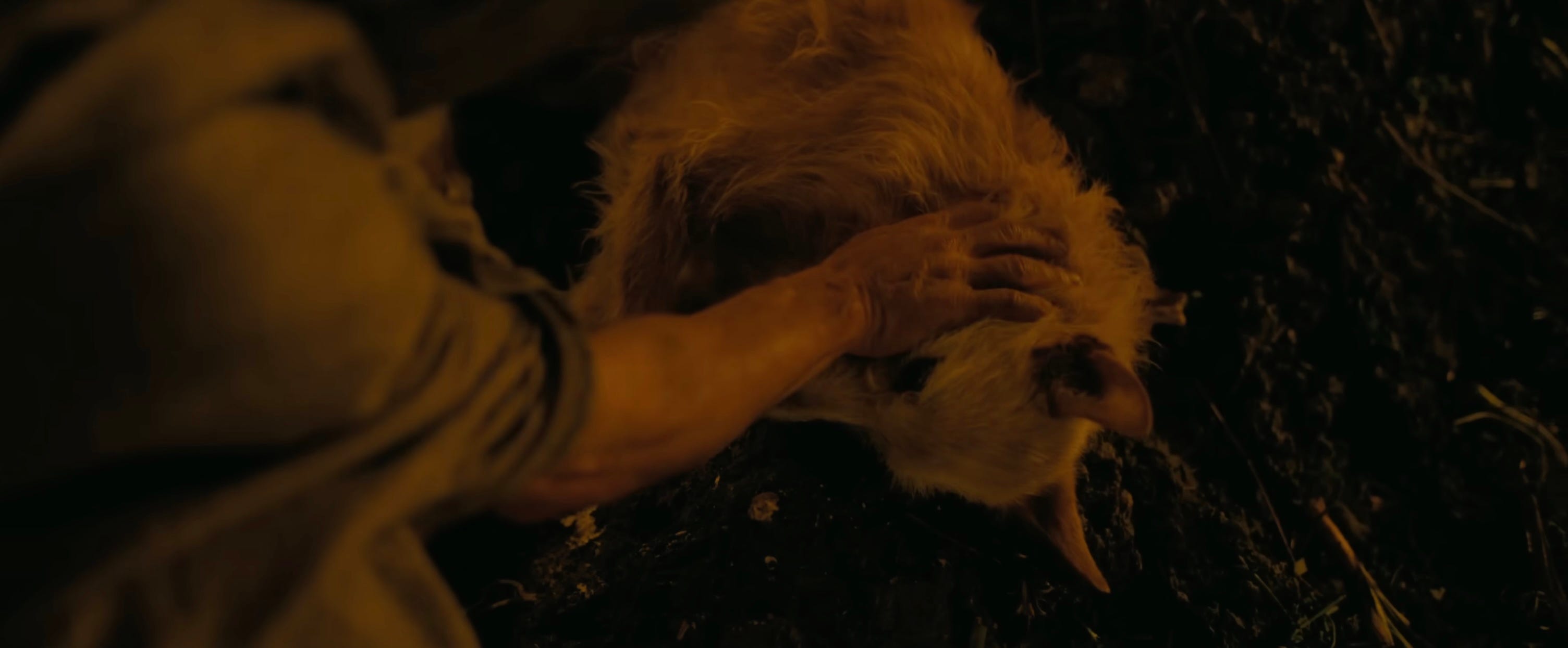
Within these sequences, Robert Pattinson outshines the film’s entire cast as the malevolent, cowardly suitor Antinous — the film’s primary villain — and makes an indelible contribution to the orchestral composition of the act. Most potently, tucked into this crescendo of events lies what is perhaps the emotional pinnacle of Nolan’s entire filmography to date. It’s the briefest of moments: Odysseus’ old hunting dog, Argos, becomes the first to recognize his master and manages one final, weak wag of his tail. It’s a moment the movie has been building toward since the beginning of the movie, through effective flashbacks of Argos the puppy and Argos the loyal hunting companion, and it lands like a heavyweight blow to the gut as Nolan’s finest act of fealty to Homer.
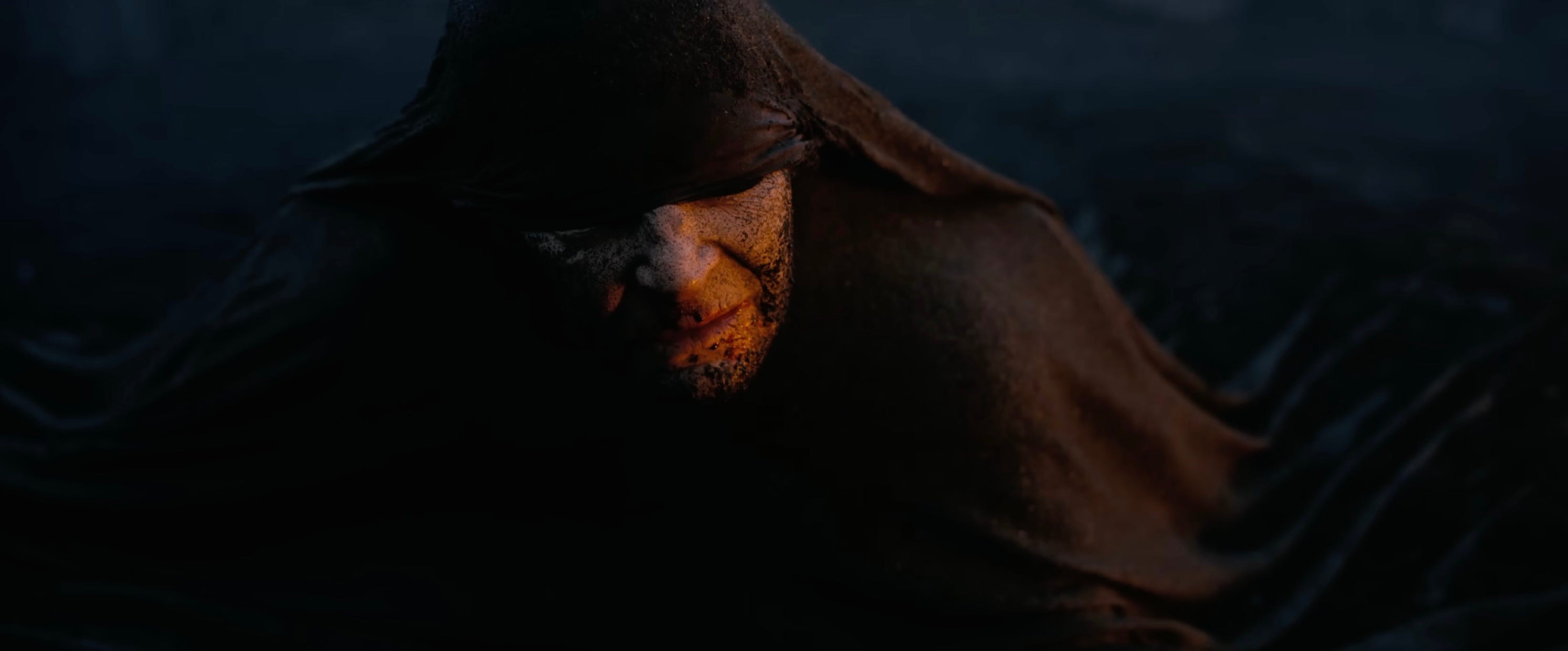
The film has a few other splendid moments, particularly Odysseus’ and his crew’s encounter with the sorceress-goddess Circe, played by an unnervingly menacing Samantha Morton, who devours every second of her short screen time with the appetite of a starved veteran. When Circe welcomes the men into her house, there is a near-imperceptible shift in time and space as the atmosphere morphs from warm hospitality to grotesque horror through some remarkable sleight-of-hand editing and blocking. The movie shifts gears into a whole other genre for the next few minutes, and it’s gloriously messy, disturbing and unlike anything Nolan has ever directed. Morton, the linchpin of the entire sequence, shape-shifts from humble host to wicked witch in ways that put her in a league next to only Pattinson and far above the rest of the cast.
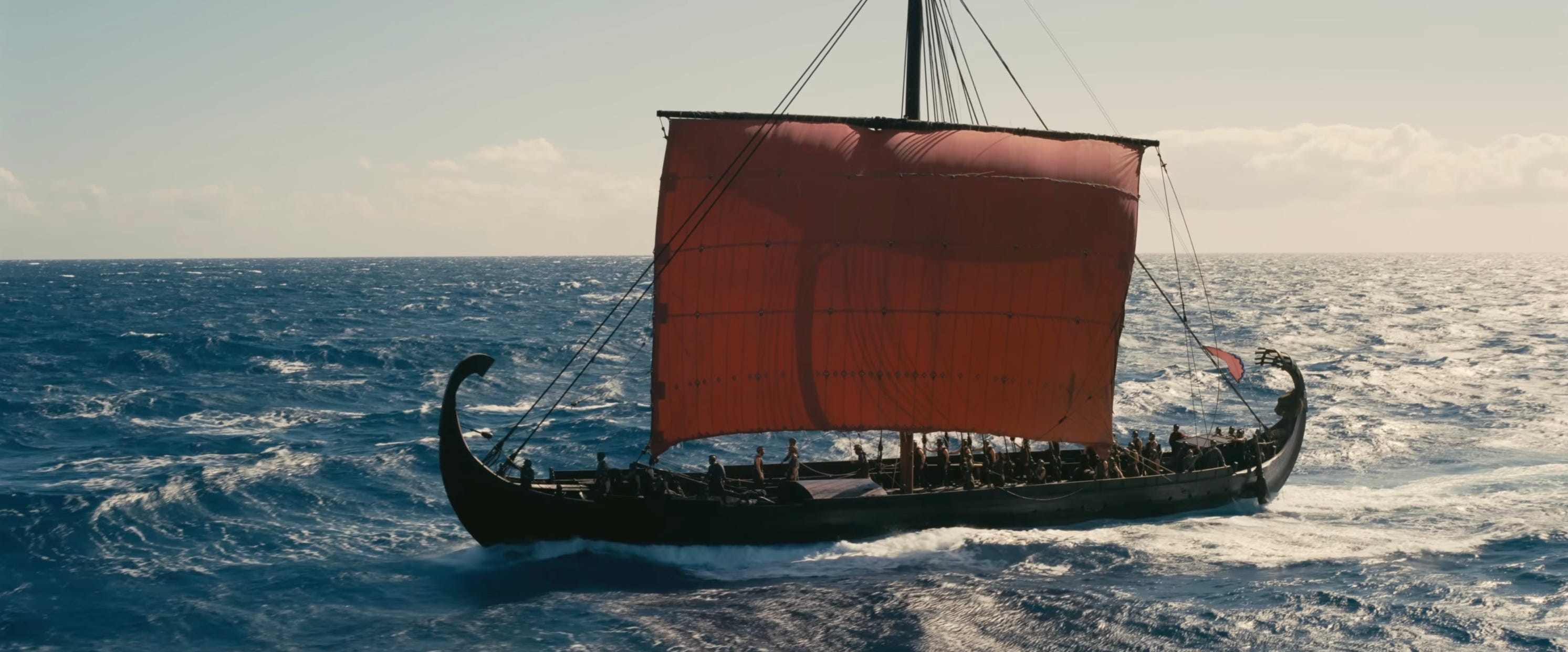
The director’s loyalty to celluloid is a very welcome part of his brand, and his name has almost become synonymous with IMAX. So, water is wet, the sky is blue, and the most recent Nolan film is technically spectacular. Filmed entirely with IMAX 65mm cameras, The Odyssey uses the scale, scope and intimacy of the frame in all their splendor to really make you feel the texture of the world on screen. You wince at the swords as if they’re about to land on your neck, smell the stink of the men suffocating inside the Trojan Horse, and taste the salt of the freezing ocean water as waves crash into Odysseus’ ship.

And yet, as a devout Nolanite for the last two decades — my own Ultimate Guide to Christopher Nolan’s Movies a testament to that devotion — it is not without considerable pain that I admit The Odyssey, as great a ride as it is on the surface and on a sensory level, did not leave me with the familiar buzz I get after total transportation. For the first time, in fact, it felt like the reactor core powering an explosive Christopher Nolan spectacle was fueled not by storytelling but by something else.
Distraction, distortion and dissonance ripple through the experience from beginning to end.
I. Distraction — Familiar Strangers
“Perhaps you've heard of Helen? Face that launched a thousand ships.”
[Shows her scarred face]
“Maybe now just five hundred.”
— Menelaus, The Odyssey (2026)
Christopher Nolan knew exactly what he was doing when he cast Lupita Nyong’o in the dual roles of Helen of Troy and Clytemnestra, Elliot Page as Sinon, the Greek soldier dubbed “the bravest of them all”, rapper Travis Scott as a nameless bard in Ithaca who recites the opening lines of the film, and Himesh Patel as Odysseus’ second-in-command Eurylochus. By choosing to make a subversive meta point about the makeup of Western civilization today, he deliberately pulls the audience out of the story they are watching.3
Every time one of these actors appears on screen — regardless of their undeniable talent or commitment to their roles — one can’t help but feel distracted, thrown out of Homer’s world and into whatever liminal space lies between it and 21st-century expectations of representation that seem to interest Nolan more. It is distraction by design. Sinon doesn’t appear in Homer’s epic poem at all, yet by the end of Nolan’s adaptation he emerges as one of the film’s moral epicenters. Helen of Troy stands out not simply because she is a Greek character played by a Kenyan actress, but because Nolan draws even more attention to that visual dissonance by having Menelaus scar her face, effectively “uglifying” the most beautiful woman in Western literature. Her Helen is also remorseful and subdued, a choice that feels deliberately at odds with the mythic, arrogant, proudly defiant figure Homer gives us.
There are even stranger dislocations than that. A particularly surreal scene features Eurylochus confronting a villager whose language he doesn’t understand. A translator explains the villager’s words to him, only for Patel’s Eurylochus to respond in frustration that the man should not fear them because they, too, are Greeks. The language the villager was speaking all along? Greek.
The scene, like Helen’s scar, Sinon’s exaltation and the choice to open the movie with a rapper from Texas, is symptomatic of the film’s larger problem of distraction. Rather than being fully transported into the “real-world way” of the story on screen, the audience is repeatedly made aware of the real world off screen by the modern machinations of Nolan’s adaptation. It’s like watching a theater play with the curtains pulled back to expose the backstage, all the ropes, levers and pulleys laid bare. The spell of storytelling is repeatedly broken. We’re not watching Homer’s world; we’re watching Nolan watching Homer’s world.
The other cast members also play their parts in distracting the audience, but not for the same reasons. The film is littered with megastars playing dress-up. The likes of John Leguizamo (as the blind and loyal old man Eumaeus) and Mia Goth (Penelope’s not-so-loyal maiden Melantho) do the best they can with the meager material they’re given, but the marquee A-listers carrying the greatest responsibility for the story ultimately fail to convince because they do not disappear into their roles.
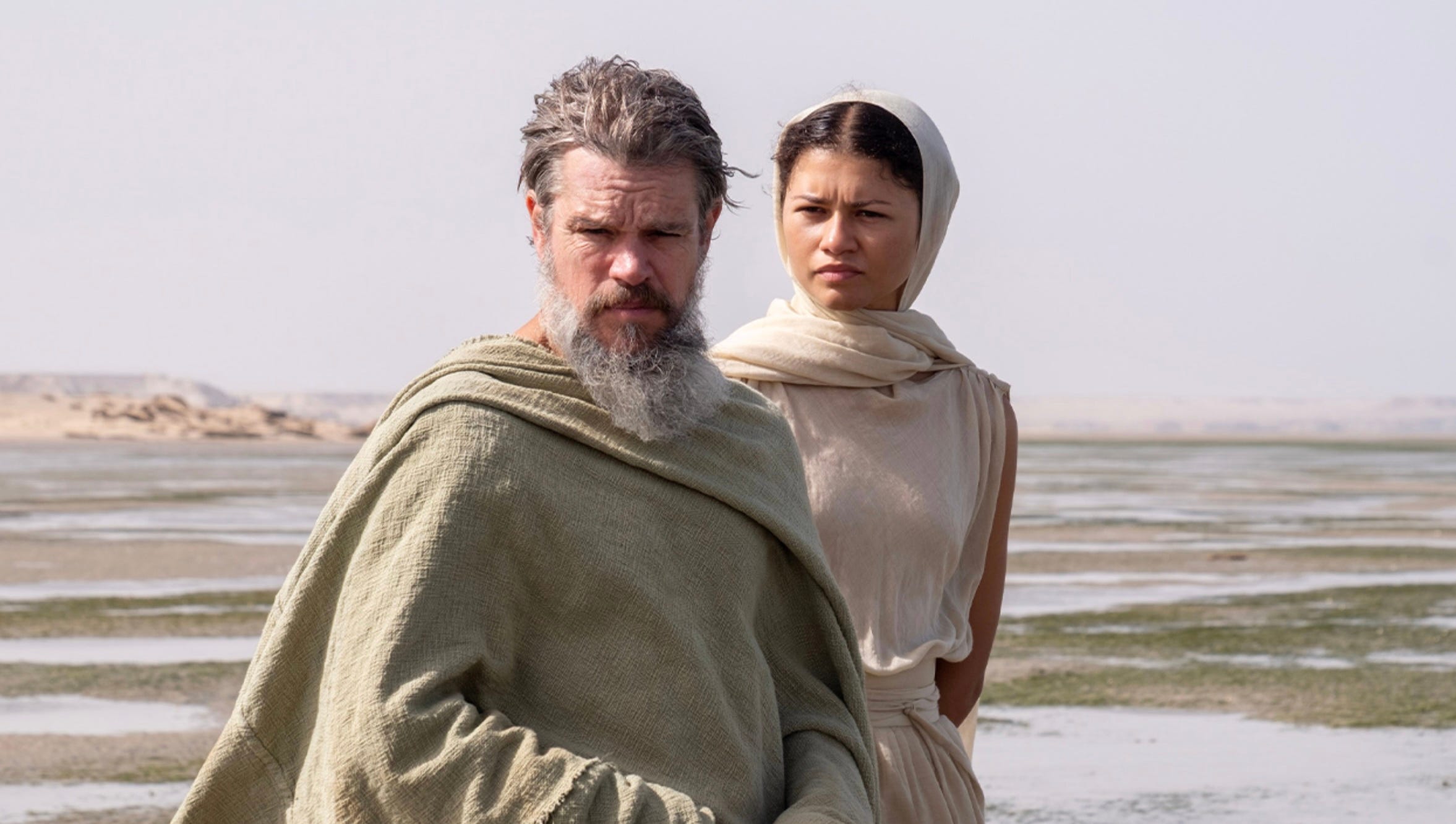
Matt Damon has made a wonderful career out of playing outsiders, tricksters and fast-talking high-IQ manipulators (The Informant!, The Talented Mr. Ripley, Rounders, etc.). Nolan’s script would’ve served him better by tapping into those aspects of Homer’s Odysseus more, because that’s when Damon shines and is most entertaining to watch. Instead, for most of the movie, the audience is asked to buy him as a returning warrior-king, leader of men, and great military commander. Damon simply doesn’t have the charisma and aura to pull that off. He is far more convincing in the final act, when he’s disguised as a beggar and glimpses of Jason Bourne appear, than he ever is as Odysseus leading his men or as Calypso’s traumatized prisoner.
The other big stars — Theron, Holland, Zendaya (who plays the goddess Athena with her signature scowl that becomes a distraction of its own) and Jon Bernthal (as Agamemnon’s brother Menelaus) — can’t shake their stardom. Ironically enough, a few weeks after the The Odyssey’s release, Holland, Zendaya and Bernthal appeared much more at home when they reprised their Marvel roles in Spider-Man: Brand New Day.
Oppenheimer worked brilliantly in part because Cillian Murphy had never carried a movie of that size as the lead. John David Washington was a casting masterstroke as the Protagonist in Tenet because of his relative anonymity. For Dunkirk, Nolan deliberately chose Fionn Whitehead as the central British private Tommy “so that the audience could feel the reality of the situation without any movie star distractions.”4 Other than Morton, Pattinson and a small handful of other familiar faces in minor roles, the rest of the cast is a parade of movie-star distractions.
Anne Hathaway walks away as the one who commits most fully, though she should have been reined in on more than one occasion and reminded that she’s not on stage but in front of a camera — an IMAX one at that. Worse than that, though, is how her Penelope is reduced to little more than a grieving woman yearning for her husband’s return. This strips one of the poem’s strongest female characters of much of her intelligence, agency and cunning.
That speaks to a larger issue, one that lies beneath the distractions of casting and performances: a screenplay that wants to have Homer’s cake and eat it too, even as the head baker is busy baking an entirely different one.
II. Distortion — Ancient Modernity
"Ten years on this fucking beach. Let's go home!"
— Odysseus, The Odyssey (2026)
Much of the discomfort and unease that permeates The Odyssey can be traced to its screenplay — adapted by Nolan himself. This turns out to be more curse than gift, not only because screenwriting is Nolan’s Achilles heel but because, in his dogged pursuit to satisfy modern audience sensibilities, his script dies from a thousand modern cuts. Whether it’s Telemachus referring to his father as “Dad”, Odysseus dropping F-bombs on the beach, or that horribly on-the-nose line that has now become a meme — “our age of Bronze is collapsing” — the dialogue too often feels written for the audience to hear rather than the characters to speak. The jarring thing is that these anachronistic lines are part of the same script that contains moments of startling Homeric lyricism, like Odysseus’ poetic description of the Sirens’ song or the very formal conversation he has with Agamemnon (Benny Safdie) in the underworld.
At times, the film isn’t sure whether it wants to be a modernized adaptation or a faithful recreation. Baz Luhrmann’s Rome + Juliet (1996) works because it’s very clearly set in a modern world even though the characters all speak Shakespearean English. The Odyssey is the inverse of that: a modern voice transplanted into Homer’s world of giants, monsters and gods. Except it’s not always a modern voice, and the relationship between gods and men is reduced to little more than a psychological device. Athena brings none of the power or commanding presence she has in the poem; the goddess of strategic warfare and wisdom is diminished to a figment of Odysseus’ traumatized imagination, the personification of his coping mechanism. Yet another strike against Nolan’s ability to write interesting women.
The moral heart of Nolan’s reinterpretation, however, is in the right place. Songs of heroic fame and glory passed down through generations should serve as cautionary tales about men losing their moral compass and the civilizational collapse that inevitably follows. To serve this idea to modern palates, Nolan simplifies the complex Ancient Greek code of hospitality known as xenia — presented as Zeus’ Law in the movie — into the Golden Rule of treating others the way you wish to be treated.
Military commanders like Odysseus are revered as heroes when in reality, Nolan suggests, they were more likely broken men, hollowed out by the trauma of war, eaten away from within by guilt and regret. All of this is revealed quite matter-of-factly through Odysseus’ final monologue, that admittedly contains some of the best lines in the film.
The message is clear, it sticks the landing, and it resonates on a profound level today. We are currently living through times when foolish, power-hungry leaders wage wars without any thought for the moral cost, while the international laws and institutions meant to hold Western civilization together are broken, dismantled or ignored. In that sense, Nolan’s The Odyssey is very topical.
The trouble is that this somber, serious, reflective tone becomes the film’s overarching preoccupation. Nolan zeroes in on the darkest, most melancholic thread running through Homer's epic and weaves an entire tapestry out of it, discarding the multitude of beautiful and complex threads that have made the original so wondrous. In doing so, he compresses The Odyssey into a single emotional register, flattening one of the richest works of Western literature into a meditation on trauma and guilt.
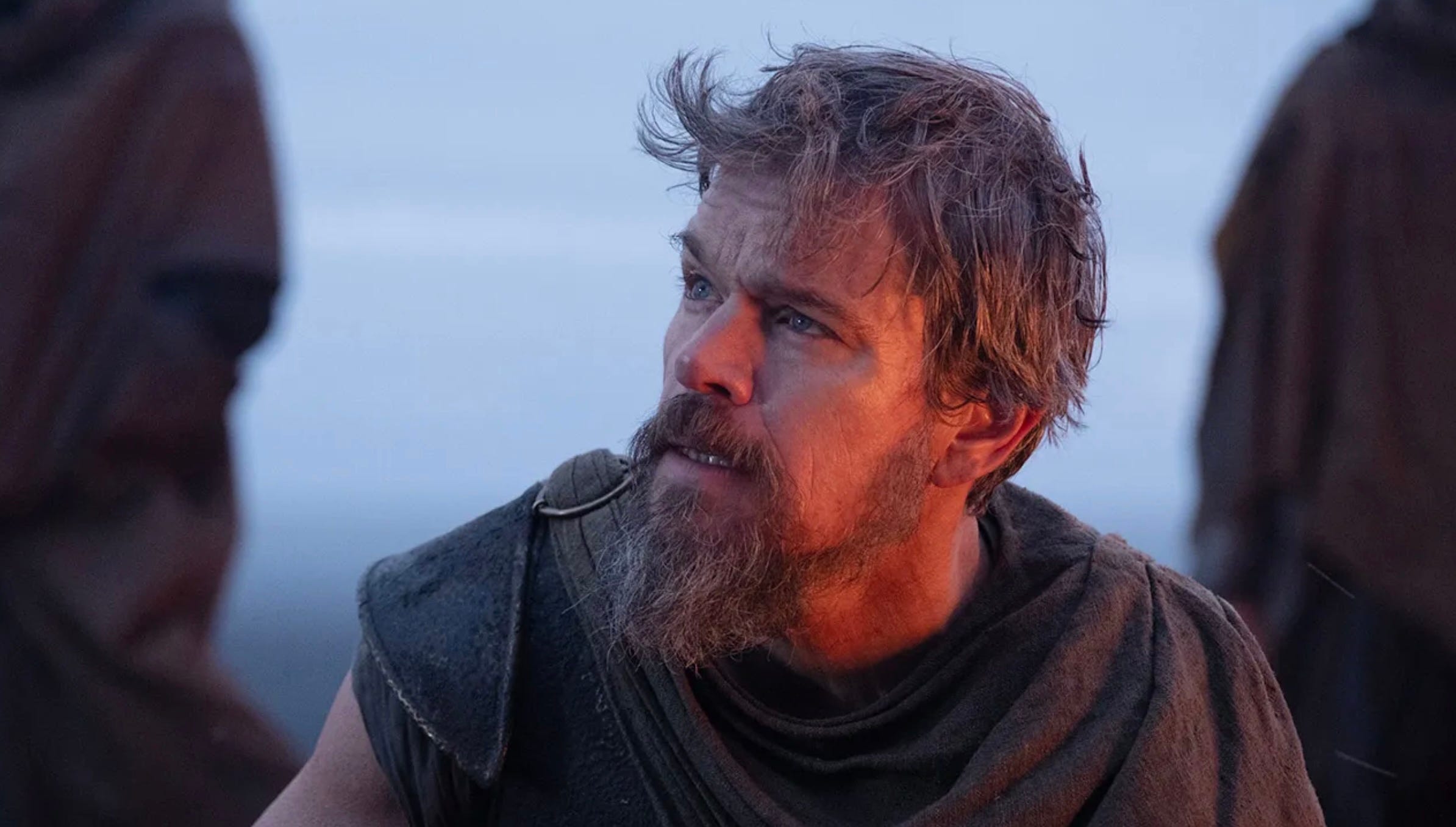
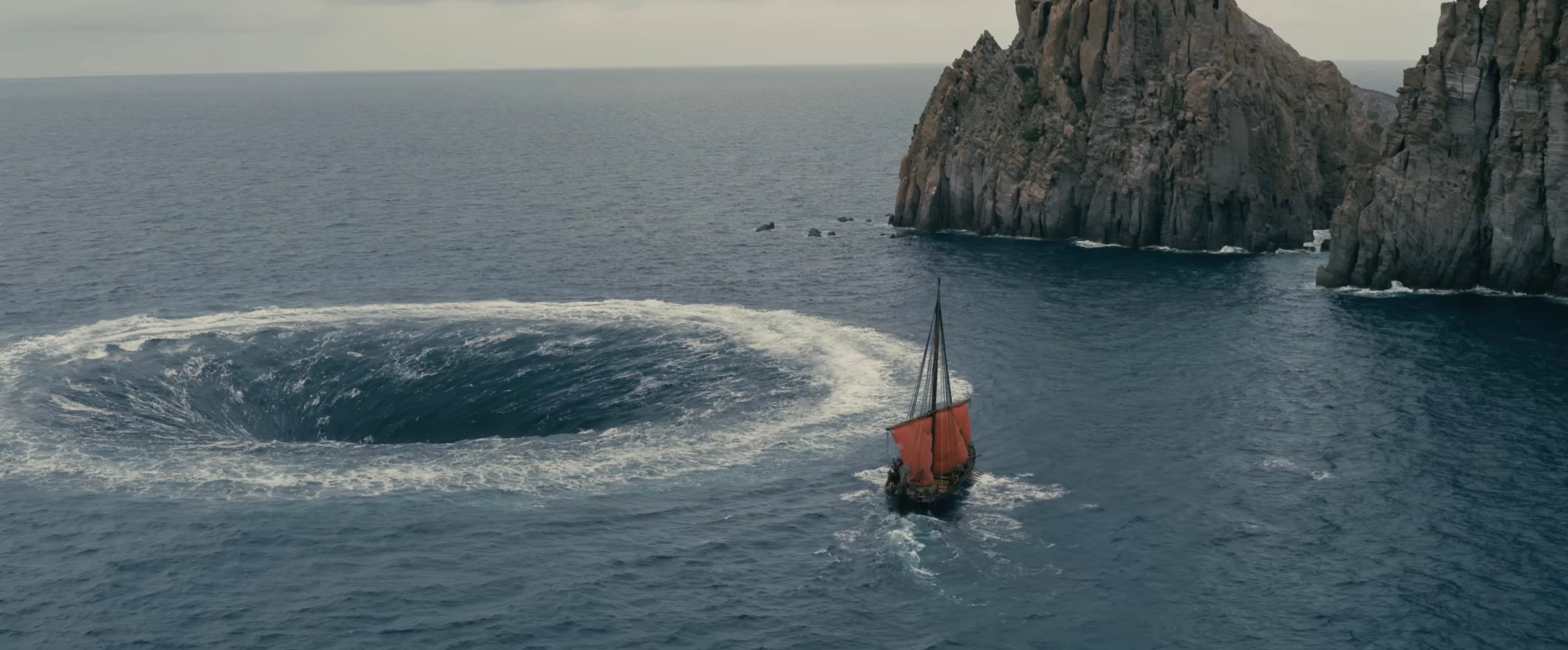
The distortion is especially pronounced when you compare the vitality of the original Odyssey, which bursts with life, color, humor, cosmic chaos, and messy humanity, to Nolan’s sterile treatment. His stated “approach to mythological elements in a sort of real-world way” is a prime example. Odysseus’ episodes with the Cyclops, the Sirens and the six-headed sea monster Scylla are all rendered with the same rushed, colorless brushstroke, as though the script is simply going through the motions.
The Cyclops becomes a sad, unintelligible giant; the Sirens occupy the screen for barely half a minute, with Odysseus’ reasons for binding himself to the mast drowned out by impatient editing; and Scylla is reduced to a faceless CGI rock monster on loan from the set of a bad Flintstones adaptation. The vivid imagination that breathed life into these mythical creatures in the original poem is smothered on screen in a “real-world way” that says nothing good about our real-world ways.
Taken individually, these distortions might amount to little more than the compulsory compromises of adaptation. Taken together, they create something harder to reconcile: the jarring effect of trying to fit a modern square peg into an ancient round hole. There’s a persistent dissonance between the world Nolan recreates and the worldview he places inside it.
III. Dissonance — Catastrophic Success
“We used to look up in the sky and wonder at our place in the stars; now, we just look down and worry about our place in the dirt.”
— Cooper, Interstellar (2014)
The Odyssey is Christopher Nolan’s first adaptation of a major literary classic, and one can’t help but walk away from it hoping it’s his last. Distraction — by way of star-filled and subversive (mis-)casting — and distortion — born from the collision between the world Nolan is writing and the world he’s adapting — work in tandem to suck the wondrous spirit out of the original poem. And once you drain The Odyssey of its wonder, you’re left with a felt absence that hollows out the experience from the inside. No matter how magnificent and rich it appears on the surface, a lingering dissonance drums beneath.
In my Ultimate Guide, I write:
Christopher Nolan is special because he’s the guy who built the strongest bridge between thought-provoking cinema and box-office entertainment.
The “box-office entertainment” end of the bridge has only been strengthened by The Odyssey. At the time of writing, the movie has grossed just over a gargantuan $1.6 billion worldwide, becoming Nolan’s highest-grossing film, the highest-grossing R-rated film in history, and one of the 20 highest-grossing films of all time. Only The Dark Knight (2008) and The Dark Knight Rises (2012) can compete once you adjust for average movie-ticket prices.
Fans of Nolan’s The Odyssey point to its commercial success as vindication, conveniently forgetting an axiom as old as the blockbuster itself: ticket sales are proof of appeal, not artistic merit. In this case, the appeal isn’t just the biggest director in the world returning after the Academy Award and box-office triumph of Oppenheimer with an even more star-studded cast; it’s the biggest director in the world adapting one of the oldest, most beloved and influential works of literature ever written. Nolan brought people to Homer, but Homer also brought people to Nolan.
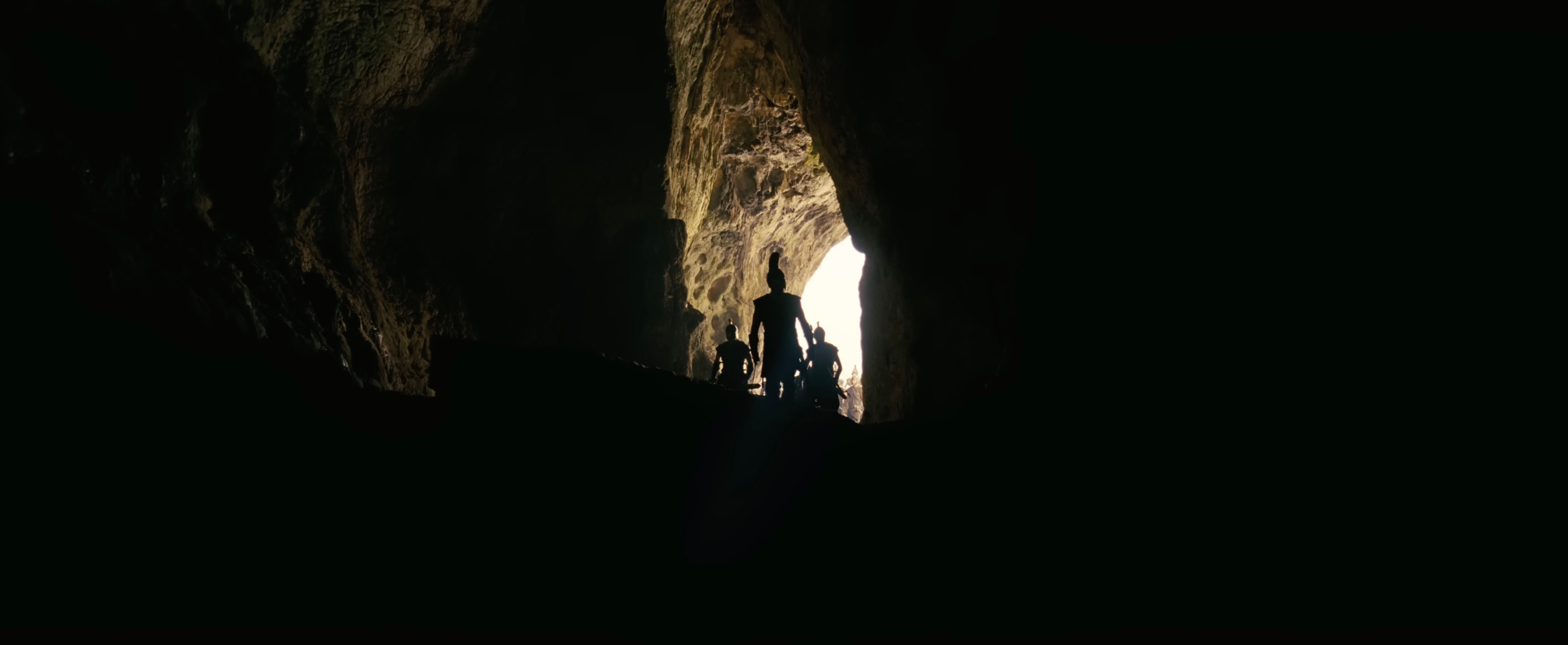
Since we’re not dealing with original ideas, historical events or real-life biographies, the film’s artistry has to be weighed on the scales of adaptation. For anyone who has never read or heard of The Odyssey before watching Nolan’s film (Lupita Nyong’o, take a bow),5 ignorance truly is bliss. But for people who love and admire Homer’s original epic poem, Nolan’s adaptation takes on the dimensions of an artistic catastrophe. It’s eerily appropriate that The Odyssey is Nolan’s thirteenth film; like any true-to-form unlucky number thirteen, it disrupts the flow of one of contemporary cinema's most remarkable filmographies. And even though The Odyssey thematically follows the end-of-world fixation so central to its two predecessors, it feels like an abrupt left turn from the path Tenet and Oppenheimer had naturally laid out. It’s an outlier defined by cinematic dissonance, ringing out from an entire parade of paradoxes.
The film is commercially successful yet artistically vapid; an R-rated spectacle that sanitizes its source material of all the sexual coercion, dismemberment, cannibalism, mutilation, mass slaughter and executions6; a mythological epic that distrusts its own mythology; an ancient world populated by conspicuously modern minds; a three-hour epic that somehow feels rushed; a story about one of literature’s great tricksters, starring an actor who excels at playing them, with hardly any trickery on display; a film overflowing with grandiosity yet starved of the original poem’s wonder; a faithful reinterpretation that is, in too many essential ways, a profoundly unfaithful adaptation.
Perhaps the biggest paradox of all is that Nolan, by his own admission, felt liberated after the success of Oppenheimer and finally had the opportunity to tackle The Odyssey in the way he always wanted to.7 But instead of subverting narrative mechanisms by toying with time and space inside the world of the story — something he has done so wonderfully in his very best movies — he directs his subversive instincts outside it. He flips one of the foundational texts of the Western literary canon like a pancake: writes self-aware dialogue, diminishes the role of the gods, psychologizes its mythology, modernizes its morality, and bends its characters toward contemporary sensibilities.
Given the freedom to reinvent The Odyssey, Nolan instead chooses to reinvent Homer, writing and directing an adaptation in spite of him rather than in his spirit.
IV. Coda — A Thousand Questions
“Art is born of constraint, thrives on struggle, and dies in freedom.”
— André Gide, “The Evolution of the Theater” (1904)
In a February 2024 interview8, after the success of Oppenheimer, the subject of art and money came up. The interviewer referenced the André Gide line directly, asking Nolan whether he had ever struggled to reconcile himself with an excess of freedom as his budgets grew and the scale of his films expanded. Nolan dismissed the premise, and the first part of his answer is worth quoting in full:
Oh, no. The wonderful thing about large-scale filmmaking, in my experience, is it’s exactly the same as a tiny-scale independent movie; you never have enough time, you never have enough money for whatever it is you’re trying to do. It’s the nature of budgeting: you chase your own tail, so if they give you more money, you try and do more. Everything Emma and I have ever done, our philosophy’s always been to take the money and put it on the screen. So, we don’t waste money pampering movie stars, or whatever.
The irony practically unspools itself. Nolan had $250 million worth of freedom to finally direct The Odyssey his way, and the end result is a “less is more” approach populated by quite a few pampered movie stars. It would seem that adapting The Odyssey on his own terms meant, above all, having enough money to film the entire thing with IMAX cameras. Was Nolan’s idea of tackling this epic story on his own terms ultimately just about expanding the scope of its production, not the scope of the story itself? With so many possibilities, avenues and themes of the poem left unexplored in the film, the answer is disappointingly clear.
I wouldn’t go quite as far as Gide and pronounce the artistry of Nolan’s cinema dead, but The Odyssey has certainly given it a good thrashing. Maybe, after repeat viewings of the film and readings of the poem, something deeper and more profound about Nolan’s revisionist approach will crystallize — something beyond the sheer spectacle of it, something that resembles the cerebral work of the man behind Tenet, Interstellar and Inception. Alas, after letting it brew in my mind for two months, the stripped-down, postmodern, self-aware version of The Odyssey still feels too reductive.
That’s not to say it hasn’t sparked a healthy amount of discourse. One fascinating lens through which to view the film emerges in one of the best interviews Nolan has done on the press tour.9 The conversation begins with the topic of civilizational perspective — Homer wrote The Odyssey some 400 years after the events it depicts; Nolan adapts it 3,000 years later — and to the stark difference between the tone of the poem (celebratory) and the film (funereal). Nolan admits this gap fascinates him and more or less says he adapted Homer with modern audience expectations front of mind.
Both Homer and Nolan inherited Odysseus from another era and remade him in the image of their own. In that sense, Nolan is something of a modern-day rhapsode, continuing an ancient tradition of reshaping a story that was sung by generations of different voices before taking the written form in which we know it today. But where that tradition expanded The Odyssey, Nolan’s modern improvisation contracts it. Homer modernized through accumulation; Nolan modernizes through reduction.
What also becomes evident from Nolan’s answers in this interview is that he appears less interested in adapting The Odyssey as it is written than in adapting what The Odyssey has come to represent. He moves through the major landmarks of Homer’s narrative, but the real lead feels less like Odysseus than The Odyssey itself, cast in the role of foundational text of Western literature and survivor of three millennia, perpetually questioning its own place within the Western canon and what that inheritance means today. It’s as if The Odyssey itself has broken the fourth wall to address us while all the other characters continue playing their parts, oblivious to what is happening around them.
It is the cultural object, not Homer’s story, that Nolan sets about reinterpreting — diversifying the ethnicity of the characters, psychologizing its mythology, modernizing its morality and filtering its ancient worldview through our own cultural sensibilities. This mechanism is evident. “To be able to identify the mechanism does not invalidate the mechanism,” Nolan explains in the same interview. “People have this idea that because I can understand why the story affects me the way it is therefore it didn’t work. That’s not how storytelling works.”
But what happens when the mechanism becomes so laborious and self-evident that it fails to affect us? Nolan is right that seeing why a story affects us needn’t stop it from working, but surely that depends on the story retaining its power to transport us in spite of the visible mechanism. The world on screen has to remain compelling enough for us to surrender to the illusion, be transported, and stop caring that we see the pulleys, levers and ropes behind it. But how can we surrender when the world on screen is not a portal into a mythical Bronze Age but a mirror, continually reflecting our own world’s sensibilities back at us? Rather than let us get lost in the fiction and contemplate its meanings afterwards, we are expected to surrender and contemplate simultaneously.
“All the world’s a stage, and all the men and women merely players,” ring Shakespeare’s eternal words. “The stage’s all the world, and all the players are merely men and women,” Nolan appears to reply.
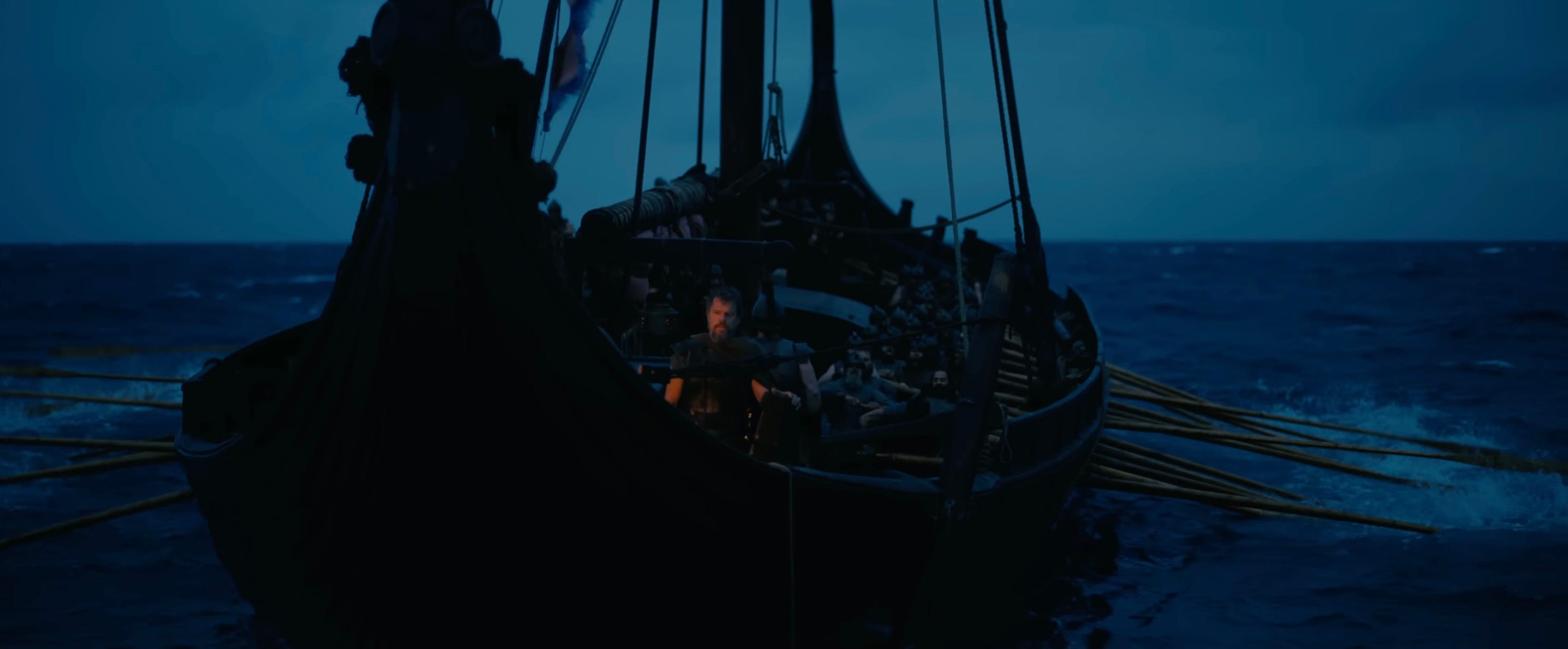
My attempt at examining the imbalance, uncertainty and clashing impulses inherent in Nolan’s reimagining of The Odyssey launches a thousand questions. Is Nolan implying that, because Western civilization is teetering toward collapse, we don’t deserve the effervescence and grandiosity of Homer’s verse in the form of a faithful, Lord of the Rings-style, three-part, twelve-hour cinematic adaptation? Is he treating The Odyssey as a cultural artifact rather than an epic poem because the distance between our world and Homer’s has become too great, or because he thinks Homer no longer speaks to our world as directly as he once did? Why does he believe modern audiences need to have mythology rationalized in order to connect with a story from an ancient time? How far can an adaptation fundamentally alter the chemistry of its source before it ceases to feel like an adaptation and becomes a reinvention?
Does Nolan actually enjoy The Odyssey?
In the tempestuous sea of contradiction, ambivalence and underwhelming undercurrents that shape my feelings about this film, I cling to whatever life rafts I can find to save the Nolan fan in me from drowning. For all my struggles with his narrative choices, the final act of the film and the Circe sequence are, as spectacles of image and sound, magnificent. I will try to watch the film one more time in cinemas for those moments alone.
The film is also indisputably an extraordinary commercial success. In the month and a half or so I spent writing this essay, the film jumped from #19 to #14 on the all-time worldwide box-office list. And it’s not done yet. Anything that gets people back into cinemas to experience the magic of movies deserves its flowers — even a film that sucks much of the magic out of the material it adapts.
The greatest gift of all, however, is also its most wonderful paradox: what it may have done for Homer. Thanks in no small part to Christopher Nolan’s own mythic status as a filmmaker, The Odyssey reignited interest in the poem: book sales skyrocketed10, and despite the adaptation’s many flaws and subversive choices, the film will undoubtedly become a gateway through which multitudes discover the beauty and wonder of the original.
Perhaps we would still do well to beware of great filmmakers bearing gifts. Perhaps our imperfect world deserves an imperfect adaptation of a poem that may itself be too exuberant for our dreary times. And if the reactor core powering this Christopher Nolan spectacle was not, as I argued at the beginning, storytelling itself, perhaps I finally understand what it was: one filmmaker’s idea of what The Odyssey needs to represent for a modern audience in 2026. Fixating on that, rather than the true spirit of the poem, hollowed out the experience for those already familiar with the source material, but it may yet send others searching for the missing depth inside.
If Nolan’s Odyssey never quite finds its way home to Homer, perhaps its greatest achievement will be leading countless members of its audience there.
Empire Magazine Interview - January 2026 issue
London Review of Books - ‘An Uncomplicated Man’ - August 2026
An interesting side note here: Christopher Nolan received worldwide backlash for having an all-white cast for Dunkirk, a film depicting a real-life historical event during WW2 that featured many soldiers of color.
Nyong’o confessed in an interview for Elle magazine that she, incredibly, never heard of Homer’s epic poem until she signed up for Nolan’s movie.
When asked about why he changed some of the more gruesome bits from the original ending, including the fate of the disloyal maidservants, Nolan told TIME Magazine, “the end of the poem is so grim and so misogynistic, I had to exclude some of that material.”
Independent interview — July 2026
Sight and Sound Interview - February 2024
This interview was conducted by a Chinese academic scholar, who speaks Ancient Greek and teaches in the States. The whole thing is worth listening to.
“UK print sales of The Odyssey increased by 1,400% in the four weeks to 25 July compared with the same period in 2025, after the film’s release in the middle of the month” according to The Guardian.