

Josh Safdie’s Marty Supreme is the exclamation point to what’s already been a very solid year for American movies. The general state of quality cinema has been on a steady decline for the past quarter century, so when a propulsive film with the kinetic fury of a 600-horsepower supercar blazes through like it’s 1999, the vapour trail you inhale delivers a much-needed rush of blood to the head.
Plot in a nutshell
Marty Mauser (Timothée Chalamet) is a struggling shoe salesman in 1950s New York, dreaming of being a world table tennis champion. He scrapes into the British Table Tennis Championships in London, where he charms movie star Kay Stone (Gwyneth Paltrow) and unnerves her pen tycoon husband Milton Rockwell (Kevin O’Leary), two key people for Marty’s next goal: the World Championships in Tokyo. Back home, Marty’s affair with married pet shop owner Rachel (Odessa A’zion) gets more complicated when she becomes pregnant.
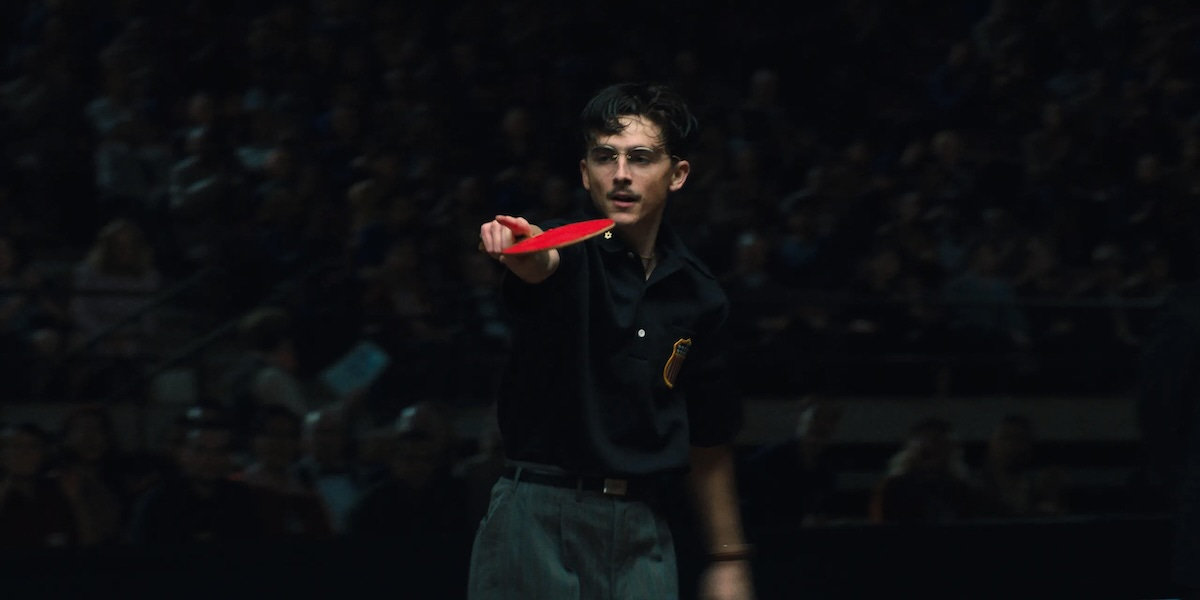
If Die Hard is not a Christmas movie because the story and plot would unfold in the same way regardless of the holiday, then Marty Supreme is not a ping pong movie. It’s a character study disguised as a sports movie. Deeper still, under the sports mask lies a psychological odyssey into the depths of the human soul, in search for the stuff that gives people drive and self-belief. It’s Taxi Driver meets Uncut Gems in how it depicts a dirty, corrupt, sleazy New York — embodied most spectacularly by the great Abel Ferrara’s dangerous criminal who only loves his dog — as we follow a protagonist who relentlessly pursues his goal, regardless of how much he lies and cheats, and who he hurts, along the way.
Marty is a difficult person to love. There are glimpses of a heart during his Japan-bound odyssey, as one hustle after another gets more intense and critical, but it’s mostly hard shell. This is a man driven by an unholy belief in himself, with animalistic tenacity that works like a primal survival instinct. And like most narcissists, he’s incredibly charismatic and funny, but he tends to see people as either obstacles or stepping stones along his path to glory. Marty Mauser’s arc is less nihilistic than some of his other screen counterparts, but the big question is: how late is it by the time life’s emotional freight train steamrolls him? Is it too late to care? Are people like Marty Mauser redeemable? And what does it say about those of us who find his dogged persistence so contagious and captivating, even when some of his actions are repellent in so many ways? Like, what did his poor mother ever do to him to deserve such treatment?!
Marty Supreme is the Danny DeVito “So anyway, I started blasting” meme of movies. It’s some of the most liberated and freewheeling direction, dialogue, editing and acting of 2025, with Chalamet (who is also credited as a producer) spring-boarding even further into superstardom. He is an acting wunderkind, and Marty is his career-best work following a string of career-defining roles. He chews every scene with the feral compulsion of a starved artist whose very life depends on this role, and it’s spellbinding to watch. If there was any doubt he’s a generational talent, Marty Supreme puts it to rest. He is so larger-than-life that it’s easy to forget the rest of the ensemble, but they are all excellent - from A’zion to even Tyler the Creator who plays fellow table tennis hustler Wally.
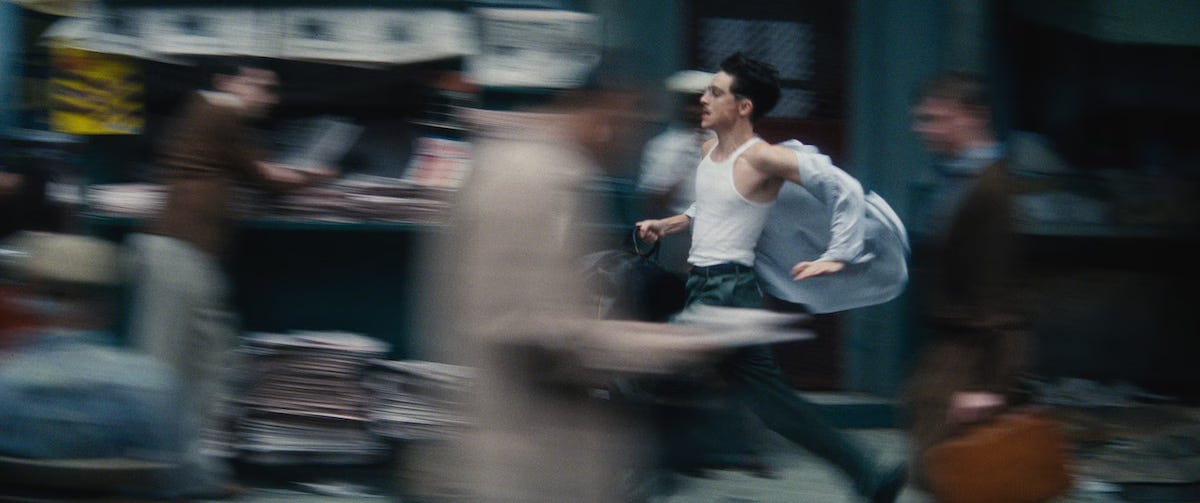
Something else I really respect about Safdie’s approach in Marty Supreme is the resistance of leaning on the overdone movie trope of the post-WW2 Jewish struggle as a crutch. The film had many opportunities to do so, as Marty’s Star of David necklace works a subtle reminder of this part of his identity throughout the film, but his attitude to the Second World War is non-existent aside from one Auschwitz joke, and Safdie doesn’t let any of the many supporting Jewish characters play the obvious card either. On the contrary, the film features one concentration camp flashback, when ping pong rival-turned-mate Béla Kletzki (Géza Röhrig of Son of Saul fame, adding a pinch of extra meta for the moment) recounts his story to Rockwell, but it opts for grotesque and uncomfortably funny over pitiful and austere which instantly makes it an all-time original WW2 flashback. It’s refreshing to see this somewhat blasé, subversive and courageous attitude towards such a sacred Hollywood topic in 2025.
All of this makes Marty Supreme one of the most refreshing experiences at the moves this year. It’s a story loosely inspired by real life table tennis pro Marty Reisman and his autobiography, but it feels original as hell — similar to how One Battle After Another is a loose adaptation of Thomas Pynchon yet still feels wholly unique. Chalamet’s unbridled ferocity is the propane to Josh Safdie’s fiery and dynamic direction, and the result is cinematic combustion. Paced to perfection, filled with unpredictable twists and turns, and performed with real audacity, Marty Supreme lives up to the hype as one of the most entertaining films of the year, and ends up unveiling a deceptively touching reflection on parenthood.
Hey, great content! Just dropped you a DM. Talk soon.