

It already feels like it’s been five years since last year with everything that’s been going on in the world, but the year 2025 in film is still very much front of mind. And what a year it was. Sure, Quentin Tarantino’s Kill Bill: The Whole Bloody Affair (both Vol.1 and Vol.2 as one film) trolled today’s sorry state of cinema as the best film released in theatres. But even as movies continue their steady decline in the 21st century, 2025 has done a lot of heavy lifting to try and flatten that downward curve.
One clear indication of how great of a year it’s been is the list of films that didn’t make the cut for my Top 20. Titles like Bugonia, Die My Love, Is This Thing On? No Other Choice, Blue Moon, A Useful Ghost and The Mastermind are all great, some even excellent, and, in some other year, they could’ve all made it in. Even big studio movies made for the most general audiences excelled. Superman was surprisingly great - a film I saw twice in theatres because it was so fun, embraces its comic book character and nature whole heartedly, and is more politically courageous than any film nominated for an Oscar. James Cameron’s third Avatar film was also an absolute treat to experience in IMAX 3D, and would’ve made the cut if it weren’t for the formulaic story.
What also strengthens my belief in the goodness of the year in film is that, on a personal note, I was able to properly attend and cover the London Film Festival. This made a huge difference in the quantity and quality of candidates for my list. Of the 30 films I saw at the festival, 12 made the cut.
So, in a year filled with films about grief, parenting, politics and cinema - a year where spirituality took on multiple dimensions, depression wore many masks, and the crossroads between adolescence and adulthood collided with growing up despite all efforts to the contrary - what were the best of the lot? Read on to find out.
20. 28 Years Later
Visceral, mercurial and filthy in ways that’ll make you want to take a decontamination shower, Danny Boyle’s return to his signature world plagued by zombies-on-meth is a primal scream that has echoed in my nightmares all year long.
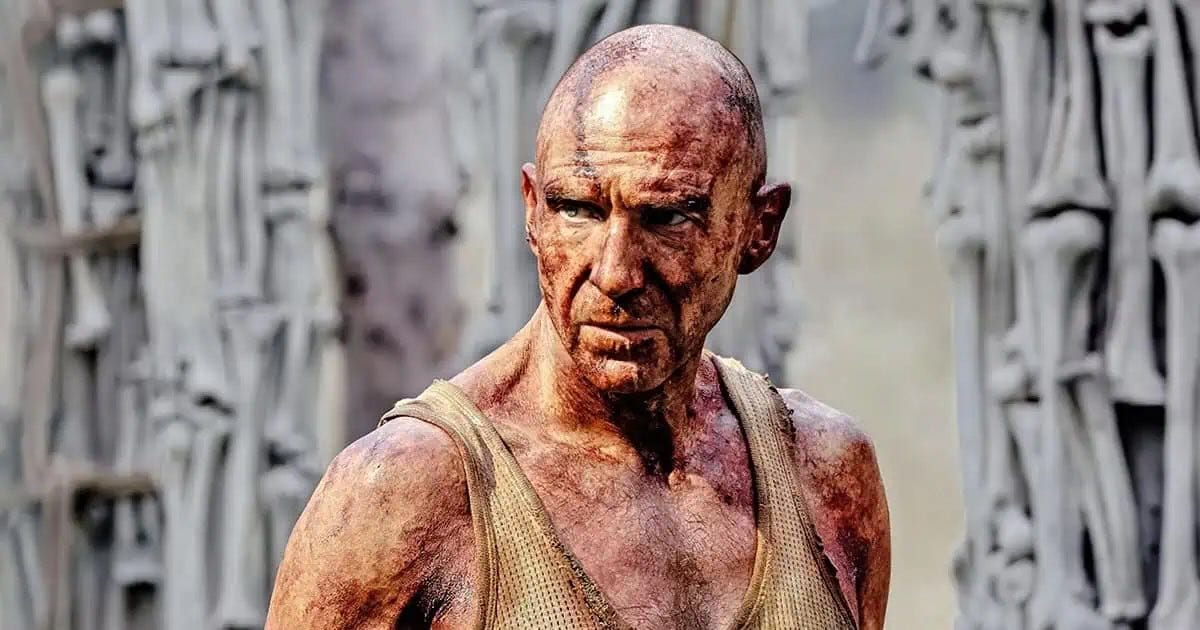
It stretches the usual boundaries of conventional horror with the most out-of-the-box batshit contagious score of the year by Young Fathers, a gripping mother-son emotional core anchored by coming-of-age energy, Oscar-worthy editing, arresting cinematography, and an electric Ralph Fiennes who delivers one of the best supporting performances of the year. Bring on The Bone Temple!
19. Rose of Nevada
Mark Jenkin’s maritime-traveling 16MM experiment, about two boatmen who board the mysterious Rose of Nevada only to go back to the past, feels like it was pulled out of a vat of sludge and scraped off with seaweed. Whatever power it conveys, it’s the kind that can only be transferred through the medium of film. Its analogue texture makes it the grimiest film of the year, so if you’re after pretty aesthetics, you won’t find it here but the result is really something quite mesmeric.

The discomfort from unconventional means leads to comfort from metaphysical ends. Our relationship with the past and its relationship with us has rarely been confronted in such an audacious way.
18. Roofman
Derek Cianfrance doesn’t flex his directorial muscles to the limits he’s reached before with films like Place Beyond the Pines (2012) and Blue Valentine (2010), but there are still levels to Roofman that make it more profound than meets the eye.
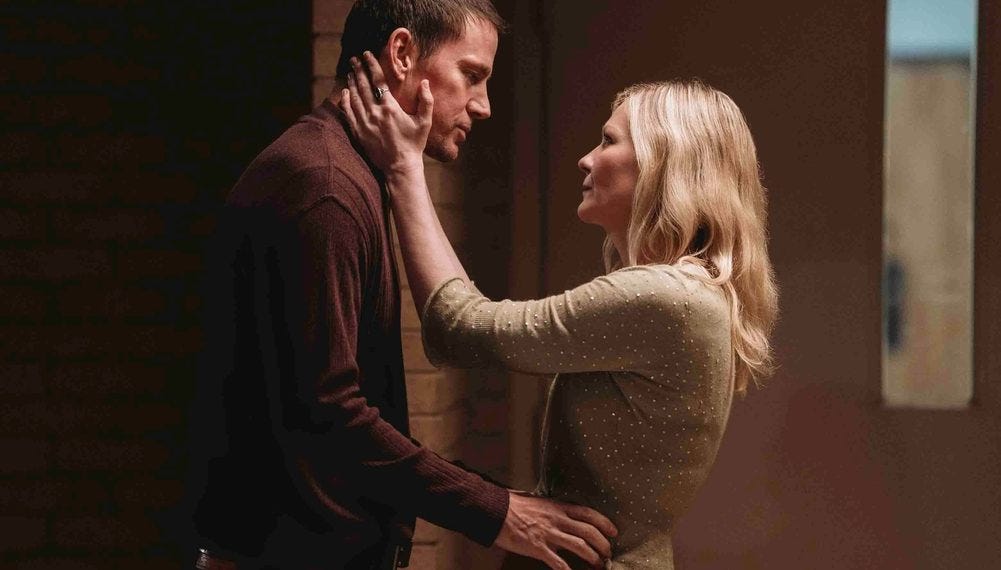
The cast is remarkable - especially Channing Tatum and Kirsten Dunst, who should be attending all of these awards shows as nominees right now - and the bizarre true story of Jeffrey Manchester builds up to an incredibly moving climax. Very entertaining and funny, and packed with stuff that makes the human condition such a wondrous, beautiful, oddity.
17. The Ice Tower
Get through the challenging first act of Lucile Hadžihalilović’s beguiling film and you’ll discover dark and mysterious corners of cinema that few directors have the talent to tap into. The story follows orphan-on-the-run Jeanne (Clara Pacini) who takes shelter in a film set of The Snow Queen and gets a little too close to its main star.
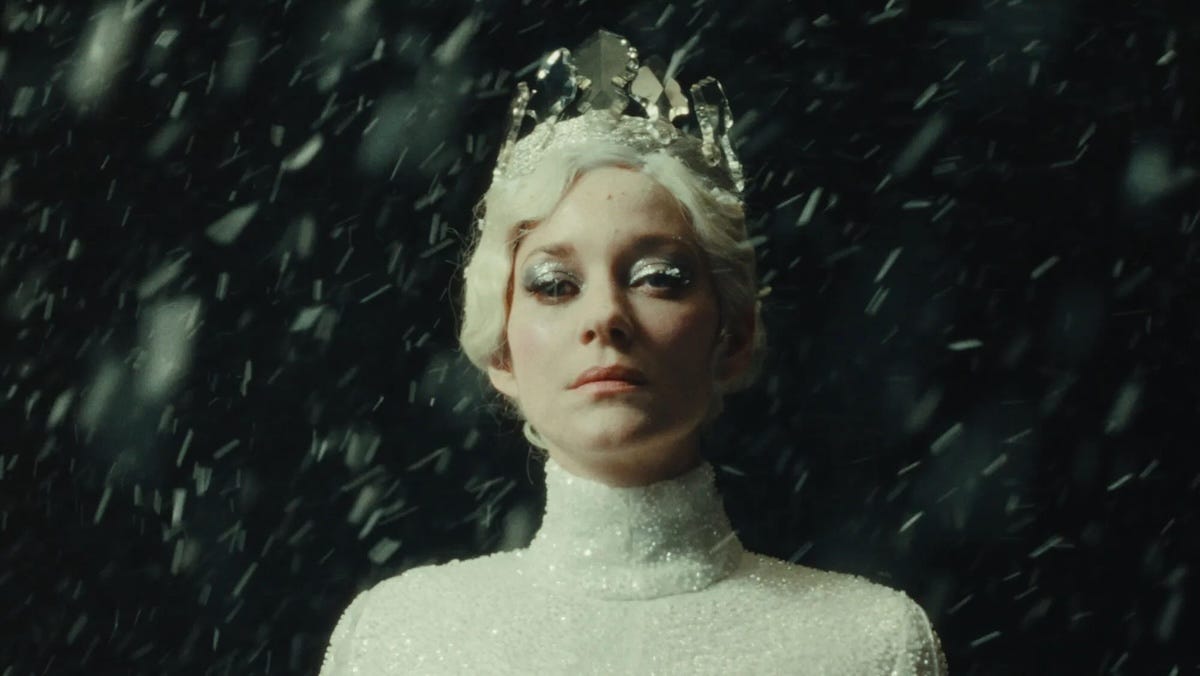
There is an indisputably Lynchian shiver that runs throughout this brooding coming-of-age movie that twists its cues from The Brothers Grimm but is really about obsession, voyeurism, infatuation and power. The raw power that the worst kinds of monsters in human clothing desire and believe they’re owed. Never meet your heroes has rarely felt so chilling an adage. Features Marion Cotillard’s most freighting - and fantastic - performance in years.
16. If I Had Legs I’d Kick You
The pangs of single motherhood with all its horrors and joys (mostly horrors here) are tactfully, thrillingly depicted by director Mary Bronstein who has so much confidence in Rose Byrne that she gives her all the heavy lifting. And boy does Byrne lift. You’ve rarely seen acting range flexed like this, from darkly funny to painfully tragic and everything in between. She spars with Timothée Chalamet for best performance of 2025.

The beauty is that the script, editing, supporting cast and direction all sync up perfectly with Byrne to create a truly masterful experience of what it feels like, down to the core, of being a working parent in a stress-addled world.
15. Miroirs No. 3
The liminal space in Christian Petzold’s mellow drama is like a hoarder’s attic — filled with a lifetime of pain and emotion. There’s a lot that’s left unsaid here, but thanks to the sophisticated direction and the measured performances, Miroirs No. 3 creates a sense of uncertainty and suspense that had me glued from start to finish. And with depression and post-personal tragedy resilience as the core themes here, it’s a real magic trick to pull that off.

In a year filled with films dealing with trauma and grief, Petzold’s is the most understated. As the title suggests, the power music has to unlock the emotional mystery boxes of our minds is also handled beautifully here. Listen out for Frankie Valli & The Four Seasons’ ‘The Night’ as one of the most effective uses of music in 2025.
14. Two Prosecutors
I’ve developed an allergy for the anti-Russian sentiment that has the entire UK under a spell, and when you’ve seen one Sergei Loznitsa film (be it documentary or fiction) you’ve seen them all in terms of his personal feelings about Russia under Putin.

Luckily, Two Prosecutors is an example of a brilliantly told story about ideals suffocated by the cold hands of totalitarianism that doesn’t make any overt attempts at drawing direct parallels to the modern world. It also gets my pick as the best cast film of the year, where every face is like a painted portrait of a different shade of life under tyranny.
13. Resurrection
The film that demands a second viewing more than any other on this list, Resurrection is not recommended for tired eyes. A near 3-hour science fiction epic that’s filled with history, Buddhist theology and a very literal love of cinema, where a woman enters the visions of a creature who still has the capacity to dream in a future where humanity has lost this ability. Through his multiple resurrections, she aims to uncover fragmented truths of the past. Wild, right?
In large enough parts, Resurrection left me in breathless awe of Bi Gan’s imagination, creativity and poetic talents as a filmmaker. His love of cinema, during the age of streamers and fledgling box office numbers, burns brightly and contagiously, as the sum of all the parts is one big magnificent ode to the wonder and magic of the moving image and sound. The final long take (a Gan signature), and the final image, is beyond astonishing. Embodiment trumps cognition, with a touch of the sublime, in Resurrection.
12. Eddington
As with the phantasmagorical, psychoanalytical nightmare Beau is Afraid (2023), Ari Aster proves that he’s ahead of the game with his latest. Compared to the more critically adored One Battle After Another - and the comparisons are bountiful - Eddington captures the contemporary political climate in a much more nuanced, sophisticated and multivalent way.
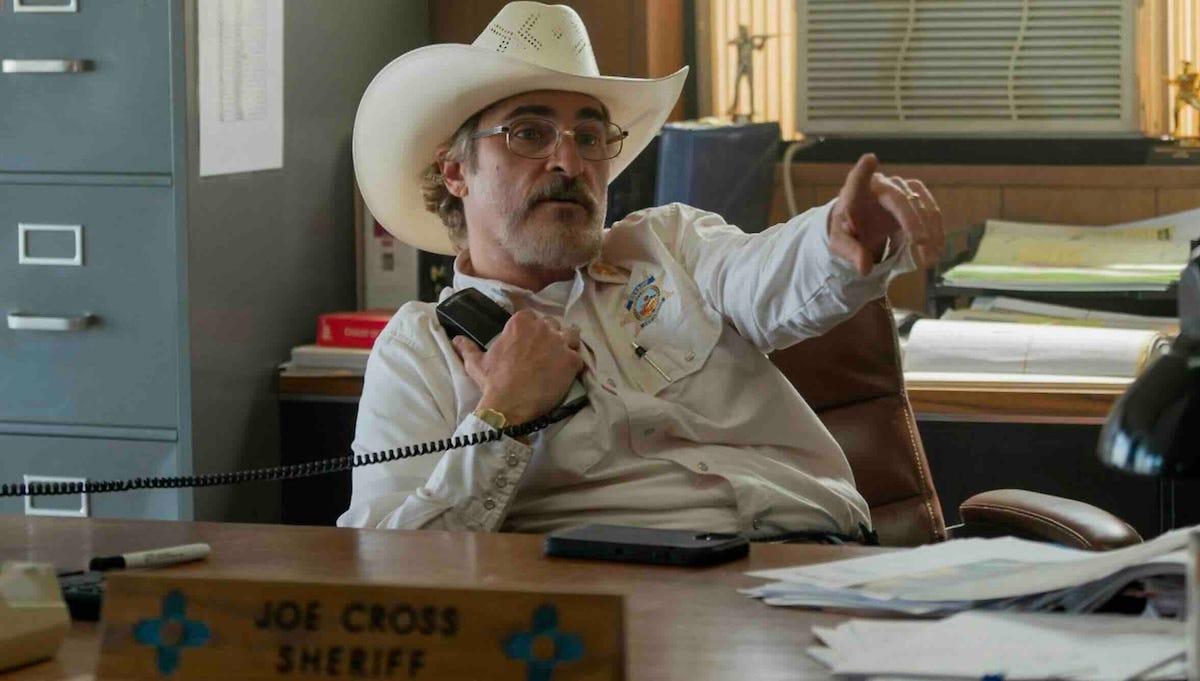
It also juggles a multitude of tones and genres while still feeling like a cohesive whole with a focused point about the absurdity of humanity we all collectively experienced during the pandemic. Needless to say the ensemble nails it, none more so than Joaquin Phoenix as the fumbling neurotic town sheriff, who reminds us why he’s one of our greats.
11. Sinners
I’m not a fan of the subject of race, but there’s no avoiding it when you’re talking about a movie set in the Mississippi Delta of the 1930s, directed by a black director. The brilliance of Sinners is that it’s such a fresh, entertaining and musical take on the topic. A period gangster film about the blues that pulls a From Dusk Till Dawn (1996) and becomes a vampire horror set in a single location? Yes please.
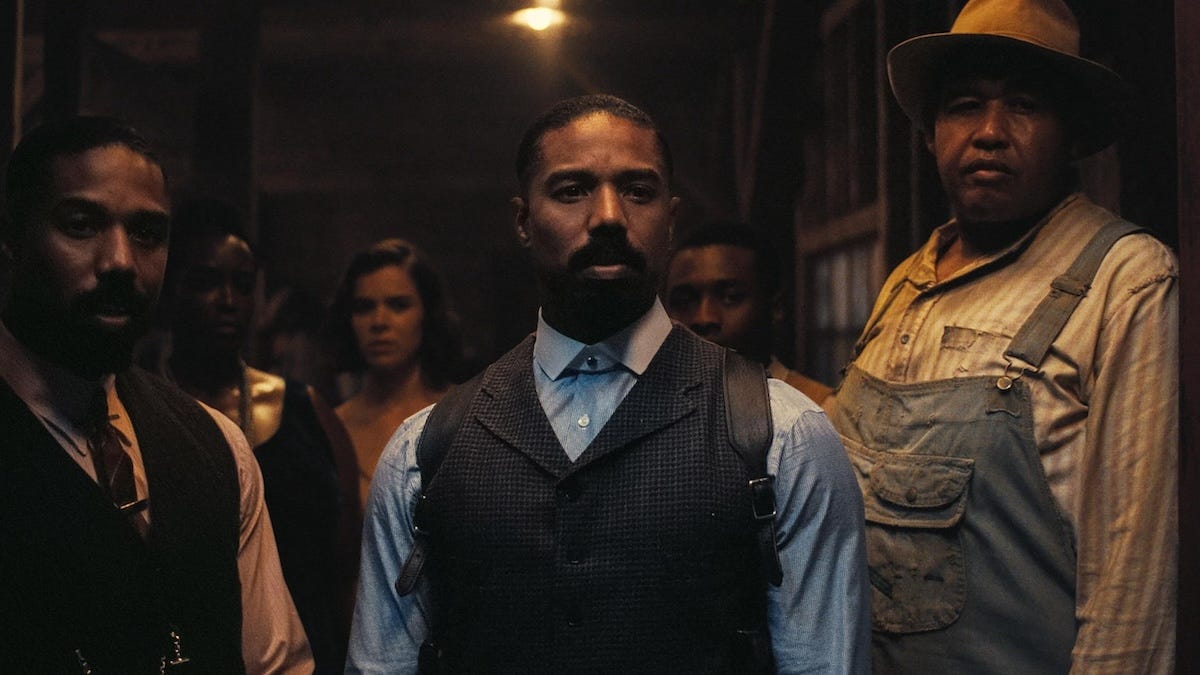
Ryan Coogler trips up on a few cliches, but all is forgiven with one of the year’s most spine-tingling transcendental sequences that truly transport. I’ve been rocking Ludwig Göransson’s score all year on Spotify, and the fact that it’s one of the year’s biggest box office success stories, R-rated and all, guarantees its legendary status. In most recent news, Sinners has made Oscar history with 16 nominations (more than any other movie ever) which has predictably set the internet on fire. But that’s a topic for another article.
10. Silent Friend
It’s a film about a tree, which is a tough sell for audiences in 2025. But those with open minds could be lucky and feel as transformed as I did after Ildikó Enyedi’s meditative botanical odyssey. Silent Friend feels like a balm for the soul, a scarce resource these days, and the three different time periods and stories, seep in, slowly but surely, gripping you in ways that will make you feel genuine emotions about the natural world, and the central tree in particular.

It’s not so much the conventional elements that elevate Silent Friend to the realms of cinematic greatness — performance, cinematography etc. — but the direction and vision, and the sense of exploration and discovery. Magnificent in a multitude of surprising ways.
9. Black Bag
This is the best thing Steven Soderbergh has directed since The Knick (2015), so it’s been a minute. With not a single frame or line of dialogue wasted, Black Bag moves through its gripping story of espionage and double-cross with panther-like stealth and precision.
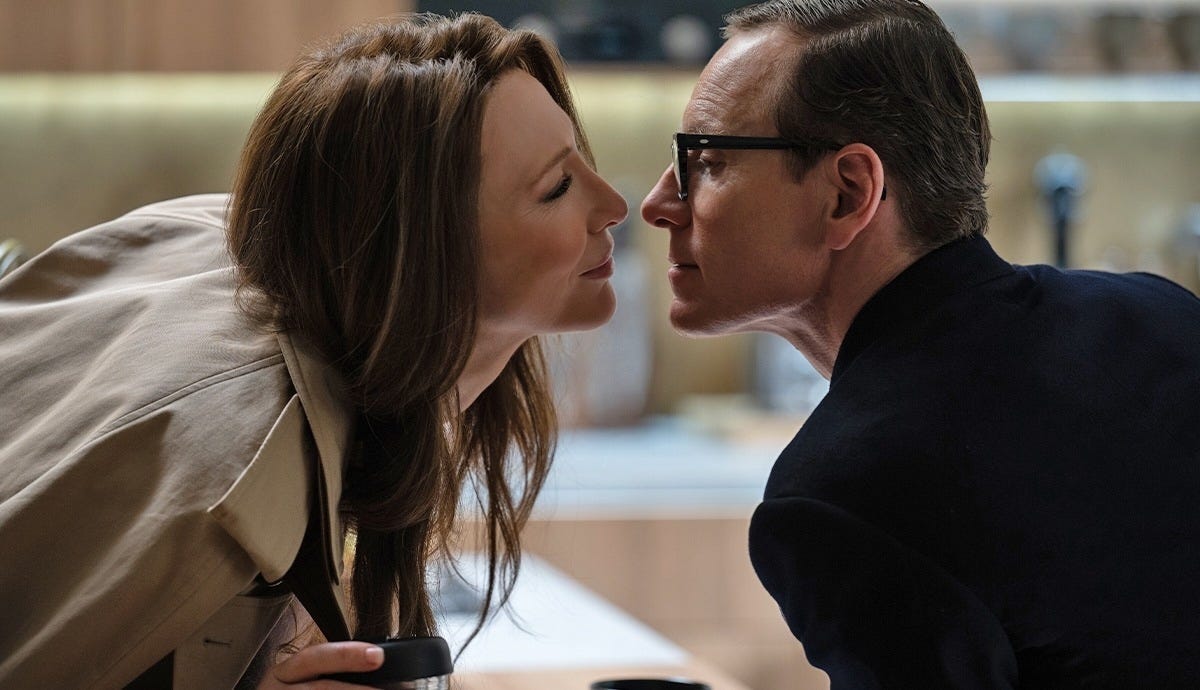
Led by a remarkable ensemble, with Michael Fassbender and Cate Blanchett perfectly paired as the killer couple at the centre of it all, we watch as betrayal and loyalty tango in suspense that ratchets up towards a brilliant conclusion. There’s not much under the surface here but what’s on it is so captivating and touches upon so many tantalizing themes, that the taut 1hr 30m breezes by in a flash. Films like this are much needed these days - intelligent, apolitical, grown-up entertainment.
8. The Testament of Ann Lee
If you’d have told me last year that I’d have a musical about the Shaker movement starring Amanda Seyfried and written by the same team behind the bloated Brutalist, in my Top 10, I would’ve thought you insane. Fast forward to my jaw dropping, my heart stopping and my mind reeling more than once while being completely under the spell of one of the year’s weirdest, most spiritual, films.

Seyfried fully commits to this role and shifts her career into a whole new level as a result, but she’s just one piece of the enchanting puzzle. The story of how the Shaker movement was born in the impoverished neighborhoods of 1800s Manchester and transported to America, on the wings of motherhood and faith, is ludicrously captivating. And that music, those harmonies, the dancing? Authentically mystical.
7. One Battle After Another
In many ways, this is the movie of 2025, with one of the highest Metascores around and on its way to win big at the Oscars, One Battle reaffirms Paul Thomas Anderson as probably the greatest American filmmaker working today. It’s one of the most engrossing and entertaining films of the year, preformed to perfection. As an action genre film, it’s damn near flawless.

Where it falters, and why it’s more PTA-lite compared to his previous masterpieces, is the canvas used for the story. It’s a bit like fine wine served in a plastic cup: a film with a beautiful message about family and legacy, told against a backdrop of safe, clichéd, intellectually inert politics (White supremacy! Kids in cages! Black power!) which feels unfortunately performative for someone who has built a reputation on a streak of principled masterpieces that go against the grain. One Battle is very much in line with the grain.
6. Weapons
As I said in my article on the genre, we are in a golden age of horror and Weapons is the film that crystallized that for me in the clearest way. The cocktail of shock, terror, suspense and pitch black humor that Zach Cregger conjures up here delivered one of the biggest dopamine hits to my system in 2025.
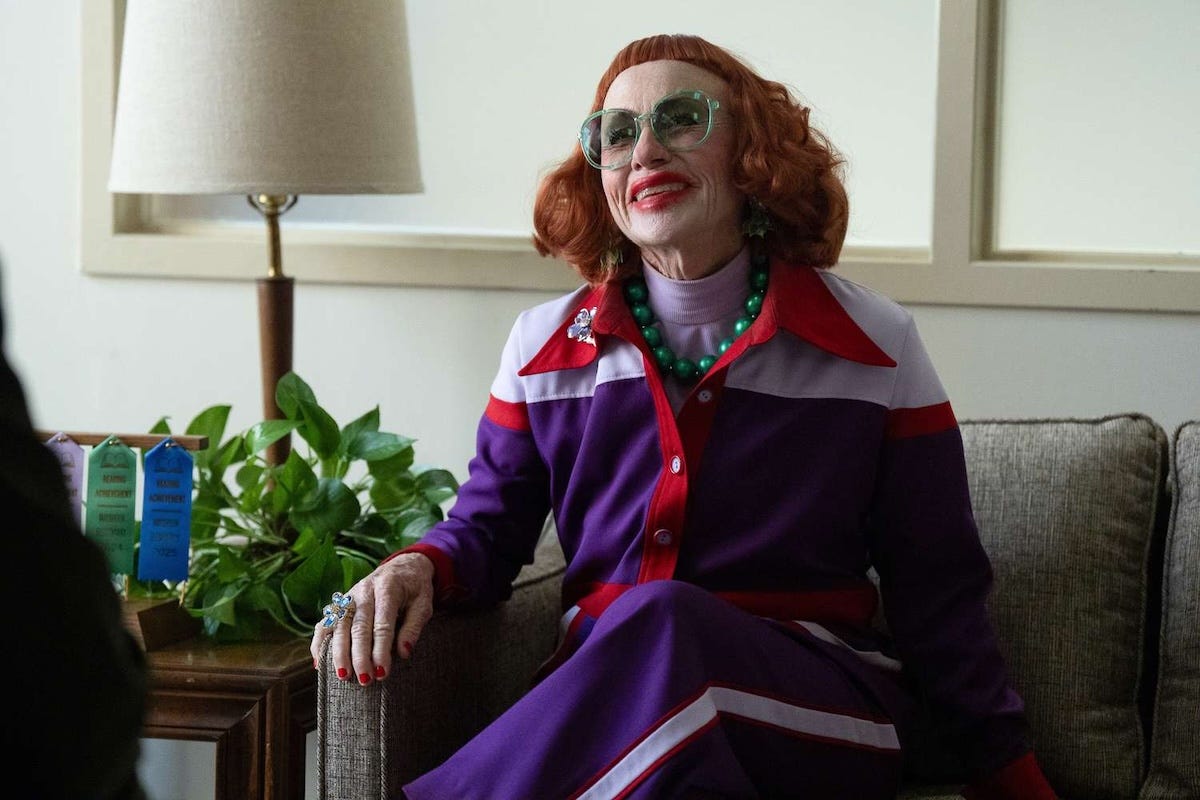
Amy Madigan’s instantly-iconic Aunt Gladys who haunts everyone’s dreams is malevolence personified, a terrifying villain unlike any other. That she doesn’t overshadow the entire film is a testament to the rest of the outstanding cast, Cregger’s masterful story-building told through a multiple POV structure, and one of the best screenplays of the year.

5. It Was Just An Accident
Jafar Panahi has been sentenced to one year in prison by the Iranian court, for alleged “propaganda against the state”, while he’s been touring Europe and the US with his latest film. He’s already been in Iranian jail and banned from making films but he just keeps going, and his latest - a riff on the concept from Roman Polanski’s Death and the Maiden (1994) - might be his crowning achievement.

The premise of a group of ex-political activists kidnapping a man they’re pretty sure was their torturer is magnificently layered, deceptively entertaining and psychologically rich. Viewing and thinking about the film through the lens of Panahi’s real life struggles with the Iranian regime gives it that extra meta kick, right between the blurry line that divides life and art. It Was Just An Accident also has the kind of ending that the absolute cinema meme was made for.
4. Marty Supreme
Just like One Battle After Another isn’t a political movie, Marty Supreme isn’t a sports movie. It’s hard to pin down what Josh Safdie’s crazy movie is exactly, outside of obviously being a character study of a young, cocky, selfish, ping pong wizard with a big dream. One that’s portrayed by soon-to-be-Oscar-winner Timothée Chalamet in ways you cannot prepare for.

This shapeshifting quality of the film is part of its allure; its set in the 1950s but anachronistic in cadence and music, it’s a gangster film, a dog film, a reckoning with parenthood, an odyssey of a hustler all set in post-WW2 1950s Jewish neighborhood of New York while avoiding all the cliched traps lesser filmmakers would fall into. The two and a half hour running time whizzes past in what is one of the most purely entertaining films of the year.
3. The Secret Agent
There hasn’t been a shortage of big political movies or movies where politics plays a big role this year. Four have already featured on my list here. But it’s this fifth one that gets my vote as the best of the lot; Kleber Mendonça Filho’s scintillating neo-noir is imperceptibly rich and features the year’s most delectable cornucopia of characters.

Wagner Moura delivers the second greatest male performance of the year as an academic researcher, sheltered by anarcho-communists and on the run from sleazy assassins, dodging dirty cops and trying to hold it all together for his son and in-laws in the sun soaked asphalt jungle of 1970s Brazil under a brutal military dictatorship. An entire subplot is dedicated to the wonder and magic of movies and the theatre experience, and the final act builds up to quiet move filled with so much symbolism and meaning, it’s nothing short of breathtaking.
2. Train Dreams
We are in a different realm altogether with Clint Bentley’s monumentally moving spiritual search for some kind of order in the chaos of life. Terence Malick is my favorite director, and Train Dreams leans heavily on Malickian techniques with the magic hour nature cinematography, and a camera that feels present rather than imposing, capturing the trajectory of an ordinary man’s quietly extraordinary life as a silent observer. Some see that as the film’s weakness, I see it as strength (although yes, I am biased). Besides, it has much more of its adapted source material, Denis Johnson’s novella, and much less of Malick’s religious overtones, so the whole affair strikes me more as inspiration than imitation.

Train Dreams is the most stoic film of the year, examining a life that’s worth living even when faced with the most unspeakable and arbitrary tragedy. The passage of time, the advancing world around us, the mysteries of life and the connection to all things man, animal and the natural world are all the big ideas swirling in this gentle hug of a film. My cup runneth over.
1. Sentimental Value
The margins in my top 5 of 2025 are razor thin, so it was no easy task picking number one. That makes it pretty tough to describe what Joachim Trier’s film does to earn that spot. All I know is it took all of 2 minutes into the film for me to know, deep in my bones, that Sentimental Value hits the bullseye of the bullseye of my wheelhouse. Anchored by the year’s best screenplay, and four seismic performances by Renate Reinsve, Stellan Skarsgård, Inga Ibsdotter Lilleaas and Elle Fanning, everything Trier explores in this movie hits hard, with perfect pitch and tempo.
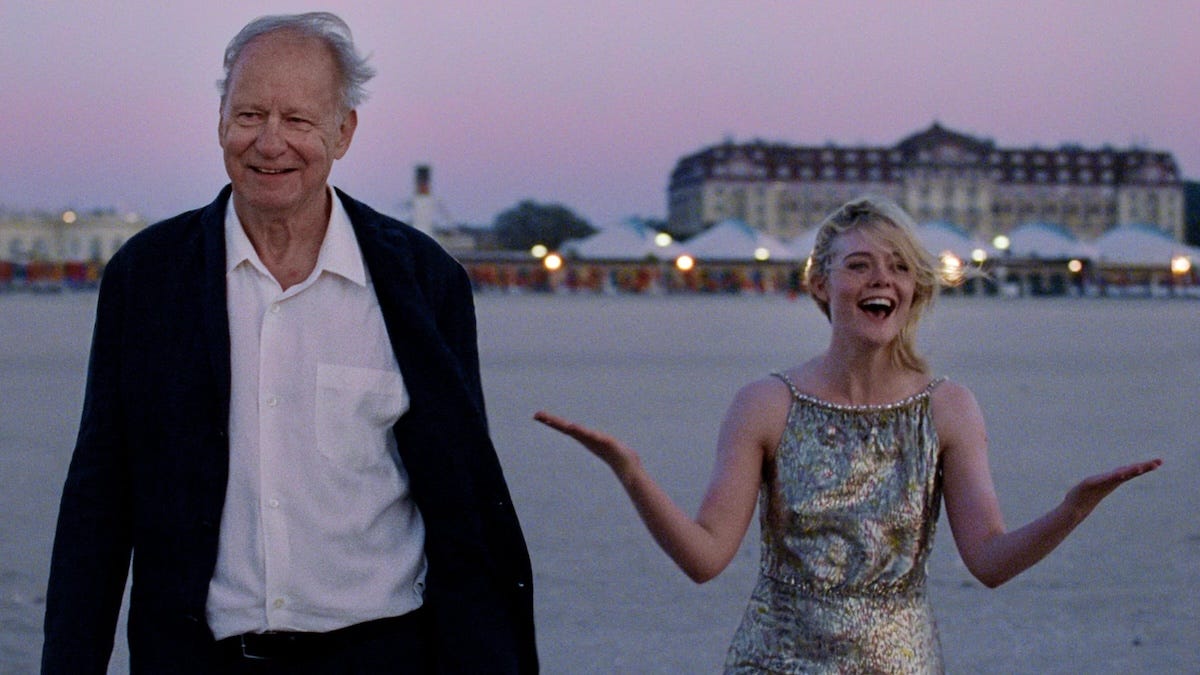
We have a multi-generational story of how a house became a home, an aging father’s attempt to reconnect with his traumatized and depressed daughter, two sisters as each other’s rocks, a film-within-a-film (what the French wonderfully call mise-en-abyme) as therapy, the filmmaking process in the age of Netflix, and the psychology behind performing a part. Herein lies a complete universe packaged into something so impossibly intimate and personal, with none of the outside world’s petty distractions (politics, religion, culture wars, etc.) allowed to enter and disrupt from what really matters. Family and home and one’s sense of place in them is at the core here, and there are few more meaningful subjects to explore in this life.

